Billing and margin in civil engineering
03.03.2026
Stake out with SitePlan: 3 functions for points, lines and plans
12.03.2026
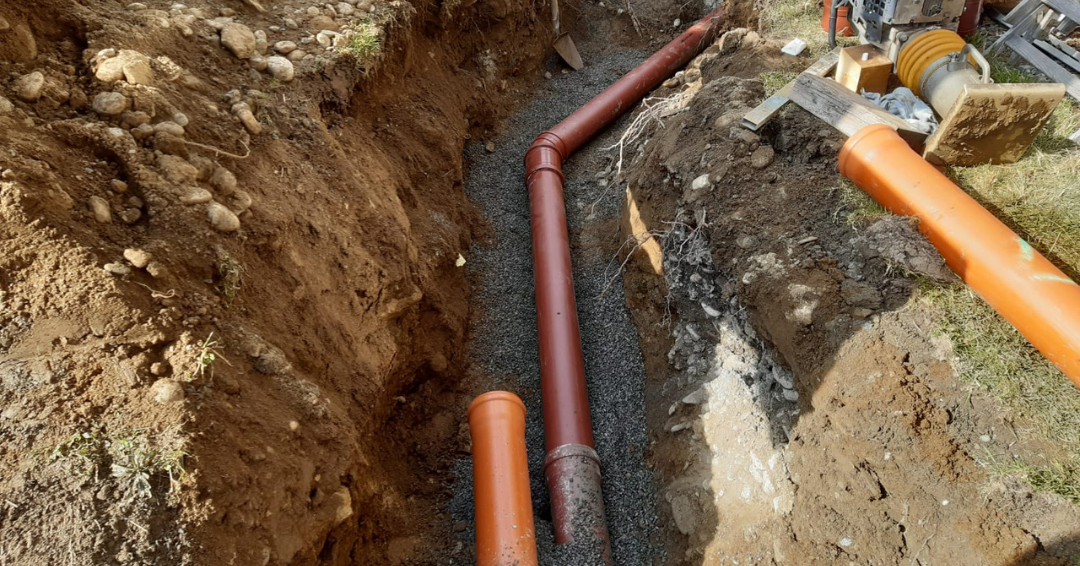
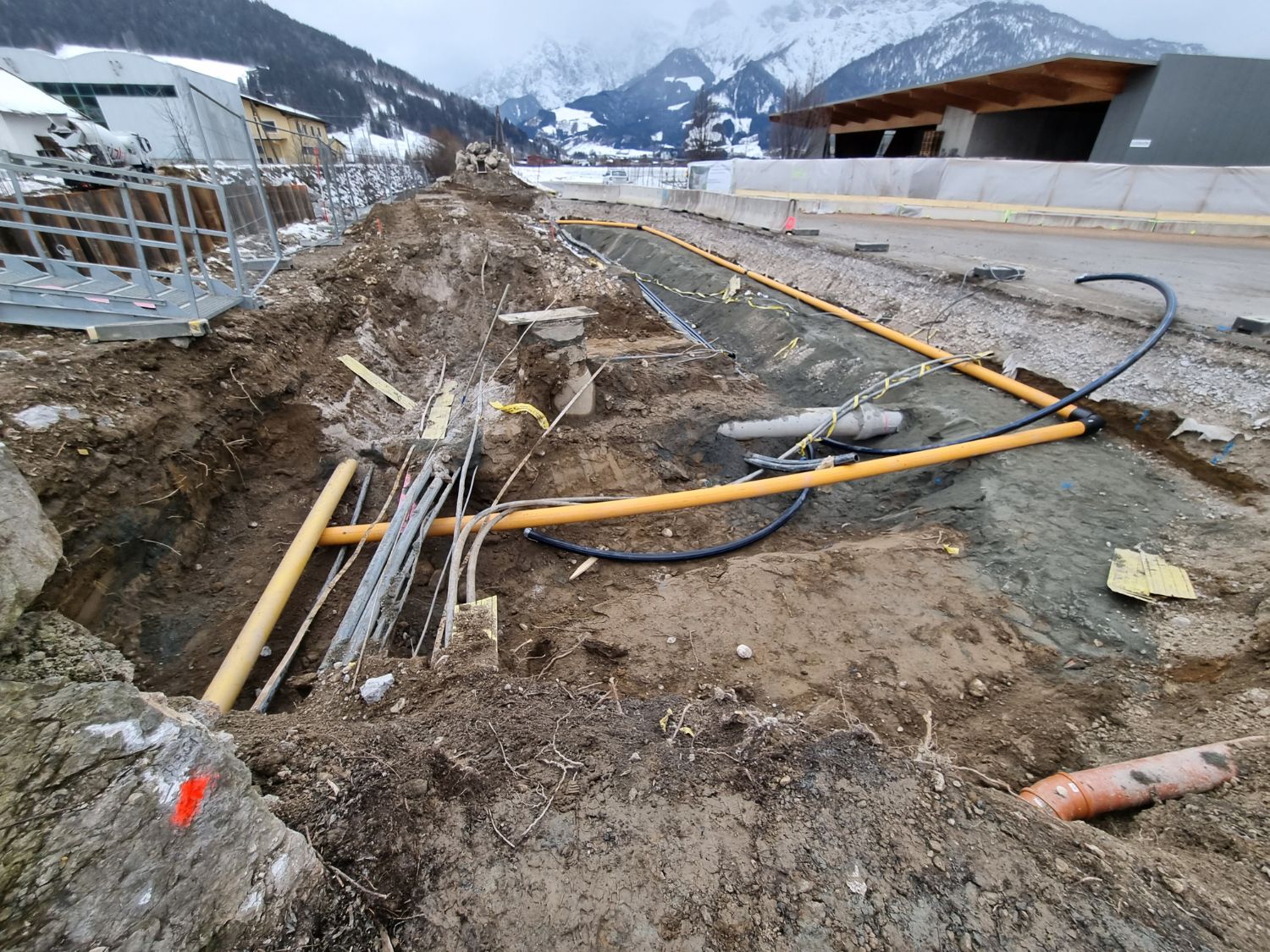
The excavator digs the trench. Suddenly a pipe is exposed. The construction site is at a standstill. The site manager is called. The lot is ready.
Every site manager in civil engineering is familiar with such situations. Nobody has to explain why pipe damage happens. Site managers, foremen and civil engineers are well aware that plans are often inaccurate, pipes are laid differently than shown, markings are missing - and the time pressure on the construction site is high.
The real question is: How can you reliably prevent damage to cables on construction sites?
The core problem on many civil engineering construction sites
Many civil engineering companies still work with the same analog process: The plan is checked, the pipeline information is obtained - and then the route is transferred to the construction site with a tape measure and paper plan.
This basically works. But this is where many problems arise:
Transferring the information from the plan to reality is time-consuming, using a tape measure and string. Even small deviations can lead to the line being several meters off the mark
It is not possible to compare the various basic plans in analog or paper form.
The reference points in line information are often not available, so precise localization using a tape measure or measuring wheel is not possible.
This creates a typical situation for site managers and civil engineers: The information exists - but not where the work is being done.
Solution: Mark cables on the construction site
The most important lever to Avoid damage to cables in underground construction, is simple: cables must be be visible where work is being done.
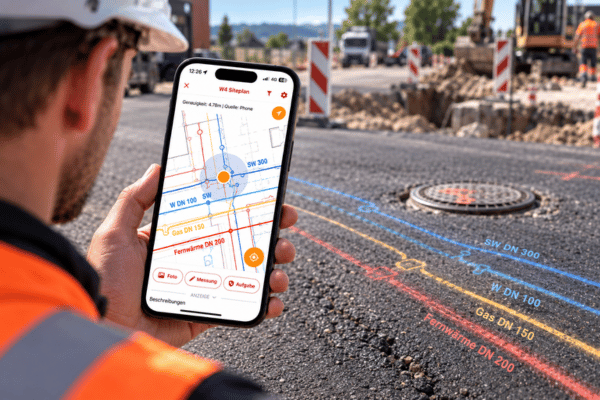
Many civil engineering companies therefore rely on Digital line marking, to locate cables more quickly and mark cable routes precisely.
The difference is crucial:
The plan does not remain in the office - it is available directly on the construction site.
Site managers, foremen and civil engineers can see immediately on the tablet or smartphone:
- where they stand
- where cables run
- where to build
This can be used to stake out cables - without measuring tape, measuring wheel and paper plan.
How digital line marking works
The process remains familiar - only it is much simpler with digital tools.
- Import plan: The site manager loads the as-built plan or CAD plan into the Siteplan app or into the web app in the browser.
- Recognize lines via plan: The plans are visible and referenced by location on all end devices.
- position on the construction site: The app shows where the site manager or foreman is on the construction site.
- Mark the cable route: The cable can be marked - without lengthy measuring.
For site managers and civil engineers, this means that the pipeline is no longer just a line in the plan, but visible information on the construction site.
Solutions like SitePlan bring plans, pipe data and position information directly to the construction site.
Why more and more civil engineering companies are working digitally
The infrastructure on the ground is becoming increasingly dense. At the same time, time pressure and documentation requirements are increasing. Traditional working methods with paper plans, tape measures and marking spray are therefore increasingly reaching their limits.
Many civil engineering companies therefore rely on Digital construction site processes. Solutions such as SitePlan bring plans, pipe data and position information to the construction site on a smartphone or tablet.
Site managers and foremen can see where cables run and where sensitive areas are located at any time. Cable routes can be checked and marked on site - without a tape measure or paper plan.
The result: cables are marked and the risk of Line damage in civil engineering decreases significantly.
Avoid line damage
The decisive difference today is no longer in the knowledge - but in the digital tools on the construction site:
If cables only exist in the plan, there is still a risk. If they are visible on the construction site, the risk of pipe damage is significantly reduced.
If you would like to see how civil engineering site managers locate and mark pipes on the construction site, you can find more information here: